Table Textiles & Care
Coyuchi Table Linens: How Fiber, Weave, and Care Shape Everyday Performance
A table textile has a job beyond looking lovely. It needs to drape well, handle the occasional spill, and come through the wash ready for another meal. Fiber, weave, finishing, and routine care all influence how that balance feels in real life.
Published November 9, 2026
There is a quiet pleasure in setting a table with fabric. A cloth softens the room, napkins add a considered detail, and the right texture can make a weekday supper feel a little more intentional. But table linens are not just decorative finishing touches. They are handled, folded, spilled on, washed, and put back into service—sometimes several times in a busy week.
That is why choosing table textiles calls for more than a color decision. Fiber affects hand feel and absorbency. Weave shapes drape, surface texture, and drying time. Finishing can influence both appearance and how a textile behaves after laundering. And care habits determine whether the piece keeps its character or gradually loses it.
This guide looks at those practical details through an educational lens, with Coyuchi as a point of reference for considering material, construction, and textile care. Specific fabric content and instructions can vary by item, so always check the product label or current manufacturer guidance before washing. The most useful rule is also the least glamorous: treat the textile in front of you, not a general idea of what “linen” or “cotton” ought to be.
Start with the fiber: what the cloth is made to do
Fiber is the first clue to how a table textile may feel and perform. Cotton is a familiar choice because it can be comfortable against the hands, absorbent, and compatible with regular machine washing when the care label allows it. The exact result depends on the yarn, fabric construction, and finish—not simply the word “cotton” on a tag.
Linen, made from flax, is often valued for its distinctive texture and relaxed drape. It can look polished without appearing overly formal, and it tends to develop a lived-in softness over time. Linen may crease readily; for many people, that is part of its character rather than a flaw. If a crisp, smooth table is the goal, ironing or careful folding may be part of the routine.
Blends combine fibers in different proportions and can be designed to balance particular qualities. A cotton-linen fabric, for instance, may bring together a familiar cotton hand and some of linen’s textural appearance. The actual behavior depends on the blend and construction, so claims about wrinkle resistance, durability, or absorbency should be grounded in an item’s specifications rather than assumed from its name.
For table use, consider what the textile will encounter. A napkin used at every meal has different demands from a decorative runner that is handled occasionally. A cloth used for casual lunches may need to tolerate frequent washing, while one reserved for celebrations may be judged as much by its drape and finish as its everyday convenience.
- For frequent use: Look for clear care instructions and a construction suited to repeated laundering.
- For a relaxed look: Natural texture and soft creasing may be welcome features.
- For a formal setting: Pay attention to drape, surface smoothness, and how easily the fabric can be pressed.
- For an informed choice: Check fiber percentages instead of relying on broad labels such as “natural” or “easy care.”
Weave is the detail you can feel
Two textiles made from the same fiber can feel strikingly different. The weave—the way yarns cross and interlace—helps determine the fabric’s surface, weight, flexibility, and openness. It also gives a textile much of its visual personality, from clean, even surfaces to pronounced patterns and tactile texture.
A plain weave has a simple, balanced structure that can create a neat, versatile cloth. Twills have diagonal lines and can have a softer, more fluid appearance, depending on the yarn and density. Dobby constructions introduce small geometric patterns through the weave, while jacquard methods can create more elaborate woven designs. These are construction terms, not automatic promises of quality; the yarn, finishing, and workmanship matter too.
For a tablecloth, drape is especially noticeable. A lighter fabric may fall in soft folds and be easier to store, while a heavier cloth can feel more substantial on the table. Napkins benefit from a surface that folds comfortably and can be handled without feeling stiff. Runners and placemats may prioritize structure, texture, or the way a pattern frames dishes and serving pieces.
Weave also contributes to drying and laundering behavior. A dense fabric may take longer to dry than a lighter, more open construction, although fiber and the conditions of the dryer or drying space also play a role. Instead of treating weight as a single measure of performance, consider the whole use pattern: how often the piece is washed, how quickly it needs to return to service, and how it feels during a meal.
Texture deserves a practical test, too. A raised pattern may add visual interest but can catch crumbs more readily than a smooth surface. Fringe or decorative edges can bring character, yet they may need gentler handling. Details that look beautiful on a folded stack should also make sense for the way the textile will be used and cleaned.
Finishing, color, and the small details that matter
Finishing is the set of processes and construction details that give a textile its final appearance and hand. Hemming, edge stitching, dyeing, and any applied finishes can all affect how a table linen looks and how it should be maintained. A well-defined hem helps keep an edge neat; carefully finished corners can make a cloth lie more evenly. These details are easy to overlook until the textile is in regular rotation.
Color can be created in different ways, including dyeing yarn before weaving or dyeing fabric after it has been constructed. Yarn-dyed patterns may have a woven, integrated look, while piece-dyed fabrics can show a more uniform field of color. Neither method guarantees that a color will never change. Repeated washing, sunlight, detergent, and stain treatments can all affect appearance, so follow the item’s care instructions and sort laundry thoughtfully.
Natural variation can also be part of the appeal. Slight shifts in texture or tone may reflect the fiber or finishing process. If a perfectly uniform surface is important, inspect the item’s product description and care guidance closely. If a relaxed, individual look is the goal, subtle variation and gentle creasing may feel right at home.
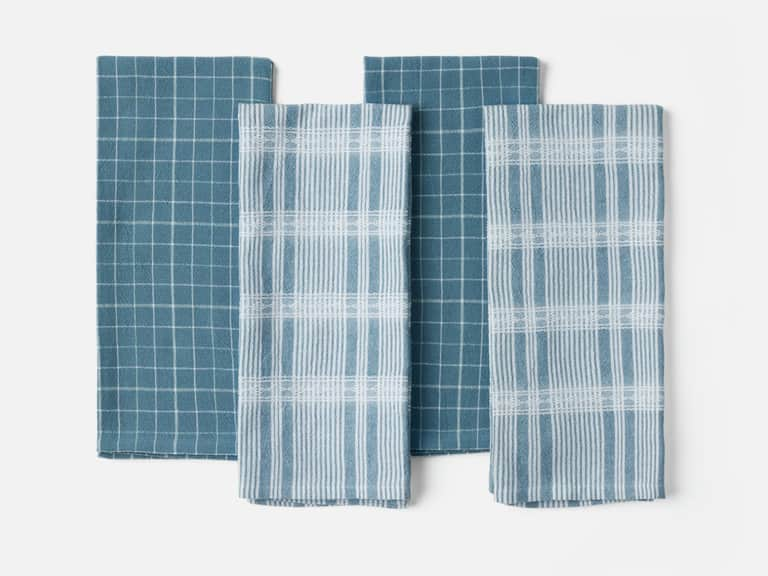
Construction details are particularly useful to check in kitchen textiles, which often bridge meal preparation and serving. Coyuchi’s Clarendon Organic Kitchen Towels, Set of 4 are described as 100% organic cotton, with tonal yarn-dyed threads, dobby stripes, and windowpane plaids. The listed details also include half-inch hems, mitered corners, a center locker loop, and dimensions of 20 by 30 inches per towel. While these are kitchen towels rather than tablecloths or napkins, they offer a concrete example of how fiber, woven pattern, finishing, and a practical hanging detail come together in a table-adjacent textile. The care guidance is to machine wash cold on a gentle cycle with like colors, tumble dry low, remove promptly, and warm iron if desired.
A care routine that respects the fabric
Regular care is where good intentions meet actual dinner. Prompt attention to spills can make laundry easier, but quick action does not mean aggressive action. Blot a fresh spill rather than rubbing it deeper into the fibers. Use a clean cloth to absorb what you can, then consult the care label before choosing a stain treatment. Different fibers, dyes, and finishes can react differently, so testing an inconspicuous area is wise when instructions are unclear.
Before washing, separate textiles by color and follow the recommended water temperature and cycle. Washing similar colors together helps reduce the chance of dye transfer. Avoid overloading the machine: fabric needs room to move and rinse. A crowded wash can leave detergent behind or encourage creasing, while an unnecessarily harsh cycle may put extra stress on yarns, hems, and decorative details.
More detergent is not necessarily better. Use an appropriate amount for the load and detergent instructions. Residue can make fabric feel less pleasant and may hold onto soil or odor. Fabric softener is also worth approaching thoughtfully, especially for absorbent textiles. Some softeners can leave a coating that changes the way a fabric takes up moisture. If a table towel seems less absorbent, first review detergent use and rinsing rather than reaching immediately for another product.
Drying is another decision point. Follow the label, and remove pieces promptly when the cycle ends to reduce set-in wrinkles. If line drying is suitable, smooth the fabric and shape its edges while it is damp. For a pressed finish, iron according to the fiber instructions; some fabrics are easier to smooth while slightly damp, while others call for a different approach. Never assume that high heat is harmless simply because a textile looks sturdy.
- Check labels before treating a stain, bleaching, or using high heat.
- Shake out napkins and cloths before loading them, and keep the washer comfortably filled rather than packed tight.
- Wash decorative trims and delicate constructions with appropriate care.
- Store completely dry textiles in a clean, dry place to prevent mustiness.
- Rotate multiple sets so that one favorite cloth does not carry every meal and every wash.
Making table linens work for different settings
The same table textile can feel perfect in one setting and fussy in another. At a family table, easy laundering and a forgiving surface may be the priorities. For a dinner party, people may care more about drape, coordinated color, and a carefully pressed finish. In a café or hospitality setting, repeatability and a manageable laundry routine become central concerns.
Start by matching the textile to the frequency and type of use. A large cloth should fit the table with the intended drop at each edge; measure the tabletop and decide how much fabric should hang before choosing a size. Napkins should feel comfortable in the hand and be large enough for their intended use. A runner should sit securely and suit the table’s proportions rather than competing with dishes or centerpieces.
Color coordination need not mean matching every item exactly. A solid cloth can calm a patterned napkin, while a restrained woven stripe can add definition to simple place settings. Consider the room’s lighting and the colors of plates, wood, and serving pieces. In a setting where spills are likely, a tone or pattern that feels practical may be more enjoyable than a pristine pale surface that causes constant worry.
For shared or professional spaces, build a realistic maintenance plan. Estimate how many sets are needed to cover washing and drying time, and identify which items can be laundered together. Consistent sizes and care instructions simplify handling. Keeping basic records—purchase date, fiber composition, wash guidance, and replacement notes—can help a facility understand how its textiles perform over time without judging quality by appearance alone.
Sustainability is a lifecycle question
Environmental considerations deserve more than a single label. Fiber sourcing, processing, dyeing, manufacturing, transport, durability, and eventual disposal can all contribute to a textile’s footprint. Certifications may provide useful information about particular standards, but they are not a substitute for reading what is certified, which product or stage it covers, and what the certification does not claim.
Care is part of the lifecycle, too. Washing at an appropriate temperature, avoiding unnecessary cycles, and drying efficiently can support a longer and more considered use pattern. Repairing a loose hem when practical may keep a piece in rotation. Choosing a textile that suits real habits can also matter: a cloth that is too delicate for a busy kitchen may be used reluctantly, while a robust everyday piece may earn years of service.
Organic fiber claims and other sourcing statements should be read precisely. For example, a product description may identify a certification, material, or origin. Those details can help readers understand a textile, but they should not be stretched into claims about every environmental or social outcome. A careful comparison looks at the actual information available and asks whether the product’s durability and maintenance needs suit its intended role.
A thoughtful checklist before choosing
Before bringing a new table textile into regular use, take a moment to consider the practical questions. What fiber is listed? What kind of weave or surface does it have? Are the dimensions right for the table or task? Is the care routine manageable? Do finishing details suit the level of use? Are any sustainability or certification statements clearly explained?
Then imagine the ordinary moments, not just the beautifully set table: the sauce that lands on a napkin, the damp towel that needs to dry, the cloth that comes out of the wash with a few creases. A good choice is one that still feels right in those moments. It should contribute to the atmosphere you want without making everyday use feel like a special occasion that requires careful supervision.
There is no universal best fiber or weave. A crisp cotton cloth, a softly creased linen napkin, and a patterned kitchen towel can each serve different purposes. Coyuchi table linens and related textiles are best assessed item by item, with attention to stated material, construction, finishing, and care—not assumptions based on a collection name alone.
Frequently asked questions
What matters most when choosing table linens?
Begin with the way the textile will be used. Fiber and weave influence feel, drape, and maintenance, while size and finishing determine how comfortably it fits into a setting. For something used often, manageable care and durable construction may matter more than a delicate finish.
Is linen or cotton better for a dining table?
Neither is automatically better. Cotton is often chosen for familiar comfort and routine care, while linen is appreciated for texture and relaxed drape. The right choice depends on the item’s construction, care instructions, and your tolerance for wrinkles and ironing.
How can I prevent table textiles from fading?
Follow the label, sort colors, avoid unnecessary exposure to strong sunlight, and use the recommended wash conditions. Colorfastness depends on the material, dye, and finishing, so no general routine can guarantee that a textile will never change over time.
Can kitchen towels be used as part of table styling?
Some kitchen towels can serve as informal napkins, bread-basket liners, or part of a relaxed table setting, provided they are clean and appropriate for the task. Check their dimensions, absorbency, and construction, and keep food-contact uses separate from towels used for cleaning.
How often should table linens be washed?
Wash them when soiled and according to their intended use and care label. Napkins and tablecloths used during meals generally need laundering after use, while a decorative runner may have a different schedule if it remains clean. Promptly address spills and let damp textiles dry rather than leaving them bunched up.
The everyday test
The strongest table textile is not necessarily the heaviest, smoothest, or most elaborate. It is the one whose fiber and construction fit the setting, whose care makes sense for the household or workplace, and whose texture invites people to sit down and stay awhile. Look closely at the label, respect the weave, handle stains calmly, and let regular care do its quiet work. When fabric performs well behind the scenes, the table gets to feel effortless.